Car Insurance Explained: Why Understanding Your Policy Matters
A car parked safely at home can become a major financial liability within hours.
Recent torrential rains across the Mumbai Metropolitan Region left large parts of Thane, Navi Mumbai and Vasai-Virar waterlogged, with cars submerged in several areas. The episode is a reminder that vehicle damage does not always come from a collision. Flooding, falling trees, fires, theft and natural calamities can also leave owners with expensive repair bills. (Hindustan Times)
That is where car insurance comes in; but simply having an insurance policy does not mean every repair bill will automatically be paid.
The type of policy, extent of coverage, deductibles, exclusions and add-on covers can make a significant difference to the amount an insurer eventually pays.
What is car insurance?
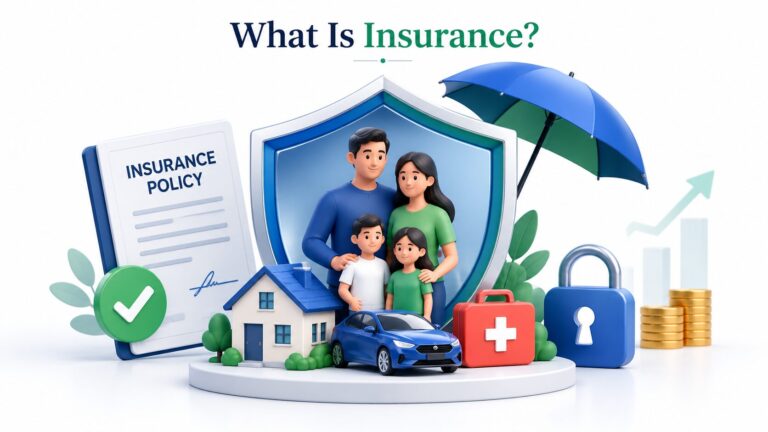
Before you learn about car insurance, check-out our detailed article on
what is insurance?
Car insurance is a financial protection against losses arising from specified risks involving your vehicle.
In India, third-party liability insurance is mandatory for vehicles being driven on public roads. It covers your legal liability for injuries or damage caused to third parties. However, it does not compensate you for damage to your own car. (IRDAI)
For protection against damage to your own vehicle, motorists can consider an own-damage policy or a comprehensive/package policy, depending on their requirements.
Third-party vs comprehensive car insurance
The difference is simple but important.
Third-party insurance
Third-party insurance primarily protects you against financial liabilities arising from injury, death or property damage caused to another person.
It does not cover damage to your own vehicle.
This is why a driver whose car is badly damaged in a flood cannot expect a basic third-party policy to pay for repairing the vehicle.
Comprehensive car insurance
A comprehensive policy combines third-party liability protection with cover for damage to your own vehicle, subject to the terms and exclusions of the policy.
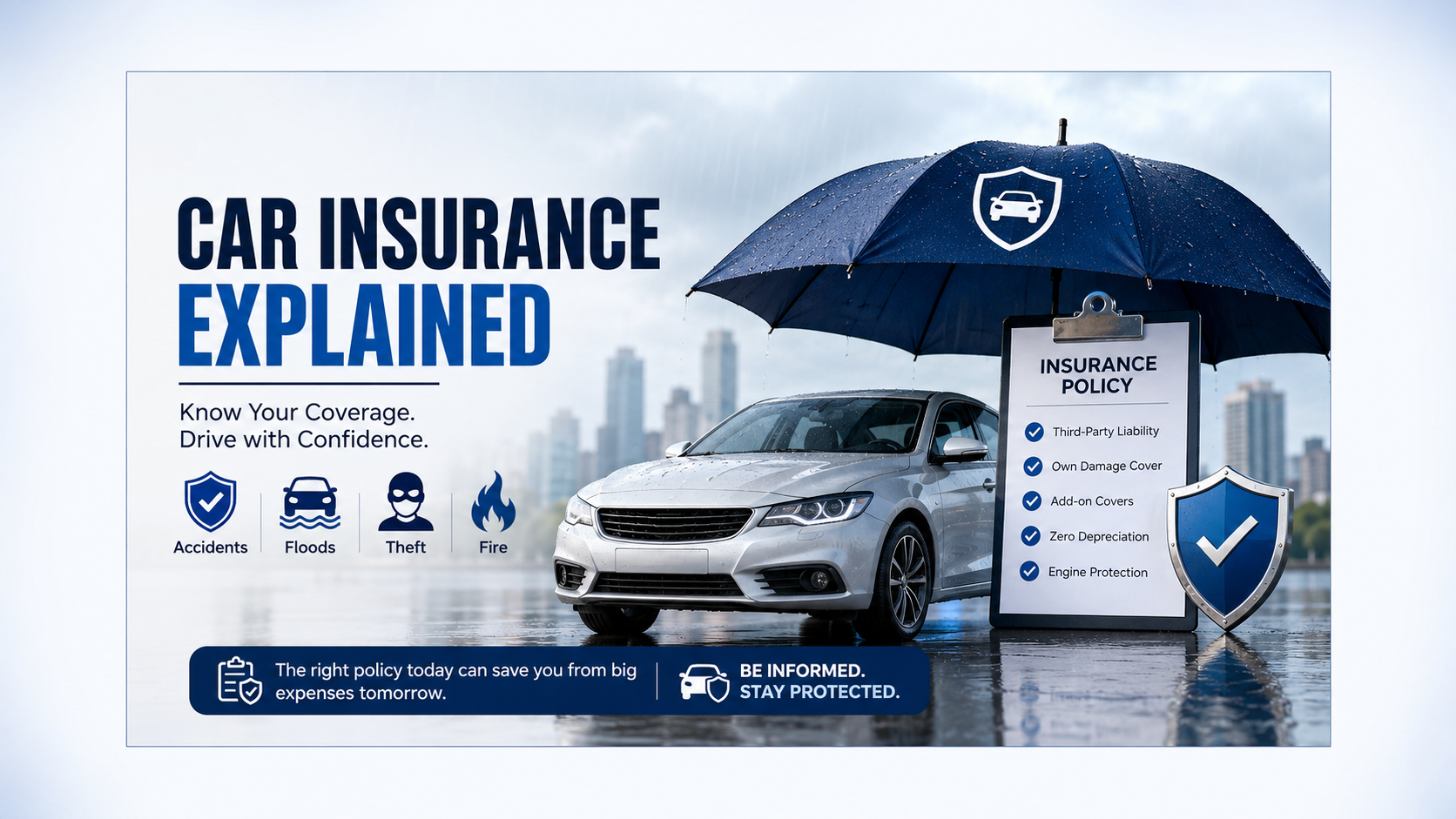
Own-damage cover can protect against risks such as accidents, theft, fire and specified natural calamities, including flood-related damage. (IRDAI)
For most private car owners, the bigger question therefore isn’t simply whether they have insurance, but whether they have the right level of cover for their vehicle and circumstances.
Why floods can become an insurance headache
Floodwater can damage far more than a car’s exterior.
Water entering a vehicle can affect:
- Engine components
- Electrical and electronic systems
- Gearbox
- Interior and upholstery
- Sensors
- Battery and wiring
- Tyres and other components
Some damage may also emerge after the vehicle has dried out.
This is particularly important during Mumbai’s monsoon season, when intense rainfall can quickly turn roads and parking areas into waterlogged zones. Recent flooding in the MMR demonstrated how quickly vehicles can become exposed to such risks. (Hindustan Times)
The engine protection question
One of the biggest misconceptions around flood-damaged cars concerns the engine.
A comprehensive policy can cover flood-related damage, but engine damage caused by water ingress may not always be treated in the same way as other flood damage. Coverage depends on the policy wording and whether an appropriate add-on has been purchased.
An engine protection add-on is designed to provide additional protection for specified engine, gearbox or related damage caused by events such as water ingress, subject to the policy’s terms and conditions. IRDAI’s insurance product records include engine-protection add-ons as a separate motor insurance product. (IRDAI)
This is why motorists should not assume that a comprehensive policy automatically means unlimited protection for every component of the car.
One rule every driver should remember
If your car stalls in deep water, do not repeatedly try to restart it.
Attempting to start a waterlogged engine can worsen the damage, including potentially causing a hydrostatic lock. Insurers and industry guidance have repeatedly warned motorists to have a stalled vehicle towed and inspected rather than attempting to restart it. (Indian Express)
What are car insurance add-ons?
Add-ons are optional covers purchased for an additional premium to expand the protection provided by the base policy.
Common motor insurance add-ons include:
Zero depreciation
Normally, depreciation on certain parts can reduce the amount payable during a claim.
A zero-depreciation or nil-depreciation add-on can reduce the impact of such depreciation, subject to the policy’s terms and applicable limits.
Engine protection
This can provide additional protection against specified engine and related damage, including certain water-ingress-related losses.
Return to invoice
This cover can provide additional protection in the event of total loss or theft, subject to the policy conditions, potentially bridging the gap between the claim settlement and the vehicle’s original invoice value.
No-claim bonus protection
The No Claim Bonus (NCB) rewards policyholders for claim-free years. IRDAI notes that NCB can range from 20% on the own-damage premium and progressively increase up to 50%, subject to applicable conditions. (IRDAI)
An NCB protection add-on can help preserve the accumulated benefit after an eligible claim, depending on the policy.
The important point is that add-ons should be selected based on the vehicle, usage and risks—not simply because a salesperson recommends them.
Health Insurance in the US: A Complete Beginner’s Guide to Understanding Your Coverage. Learn more.
What is IDV and why does it matter?
IDV, or Insured Declared Value, is the sum insured for the vehicle under own-damage cover.
IRDAI says the IDV should reflect the vehicle’s current market value. (IRDAI)
A lower IDV may make a policy appear cheaper, but it can also mean lower protection if the vehicle is stolen or declared a total loss.
When comparing policies, therefore, don’t look only at the premium.
Compare:
- IDV
- Deductibles
- Coverage
- Exclusions
- Add-ons
- Claim conditions
- Cashless garage network
- Insurer’s service features
IRDAI itself advises consumers to compare multiple quotes while also examining coverage, deductibles and IDV rather than selecting a policy solely on the basis of the lowest premium. (IRDAI)
What is a deductible?
A deductible is the portion of an eligible claim that the policyholder has to bear.
For example, if an eligible repair costs ₹50,000 and the applicable deductible is ₹2,000, the insurer may pay the balance after accounting for other applicable deductions and policy conditions.
A policy with a lower premium may sometimes come with a higher deductible.
That is why cheap insurance is not necessarily cheap insurance.
What should you do after an accident or flood?
The first priority should always be safety.
After that:
- Inform the insurer as soon as reasonably possible.
- Avoid unnecessarily moving or repairing the vehicle before the insurer’s instructions.
- Photograph and record the damage.
- Keep relevant documents ready.
- Use the insurer’s towing or roadside assistance service where available.
- Follow the claim process specified in your policy.
IRDAI states that motor insurance claims generally require documents such as the claim form, registration certificate, repair estimate and repair invoice, although requirements can vary depending on the claim and policy. (IRDAI)
For a flood-damaged vehicle, do not restart the car simply to check whether it works. Get professional assistance instead.
What can cause a claim to become complicated?
Insurance is a contract, not a blanket promise to pay every expense.
Claims can be affected by factors such as:
- Policy exclusions
- Lack of appropriate coverage
- Applicable deductibles
- Depreciation
- Policy conditions
- Delayed reporting
- Unauthorised repairs
- Driver or vehicle-related violations
- Attempting to aggravate or worsen the damage
The exact outcome depends on the wording of the individual policy.
This is why reading the policy document may be more valuable than simply comparing the premium displayed on an insurance website.
What is 50-30-20 Budget Rule? Learn more.
How much car insurance should you buy?
There is no universal answer.
A new, expensive vehicle used daily in a flood-prone city may warrant a different level of protection from an older vehicle that is driven occasionally.
A sensible evaluation should consider:
Vehicle value + usage + location + age + driving pattern + financial ability to absorb a large repair bill.
For newer vehicles, motorists may also want to examine whether add-ons such as zero depreciation, engine protection or return-to-invoice cover are relevant to their situation.
Consumer takeaway
For most households, a car is one of the largest purchases after a home.
Yet insurance is often treated as an annual compliance exercise: renew the policy, pay the premium and forget about it.
That approach can become expensive when something goes wrong.
The more useful approach is to treat motor insurance as a risk-management decision.
Before renewing, ask five questions:
- Does my policy cover damage to my own vehicle?
- Is the IDV appropriate?
- What deductibles will I have to pay?
- Do I need any add-ons?
- What are the major exclusions?
The answers matter far more than simply choosing the cheapest premium.
The recent flooding seen across parts of the Mumbai Metropolitan Region is a useful reminder that vehicle risks extend well beyond road accidents. (Hindustan Times)
Conclusion
A motor insurance policy can provide valuable financial protection, but only when the policy matches the risks a vehicle owner actually faces.
Third-party insurance fulfils a legal requirement. Comprehensive and own-damage covers can provide broader financial protection. Add-ons can further strengthen that protection, but they come with additional costs and conditions.
For car owners, the smartest insurance decision is therefore not necessarily to buy more insurance. It is to understand what they are already paying for—and what they are not.
Disclaimer: This article is for educational purposes only and does not constitute insurance, financial or investment advice. Insurance coverage, exclusions, deductibles and claim settlement are subject to the terms and conditions of the specific policy. Readers should review their policy documents and consult the insurer or a qualified insurance adviser before making a decision.
Curious about other Insurances and how they can help you? Here is our guide on Health Insurance – Learn More