
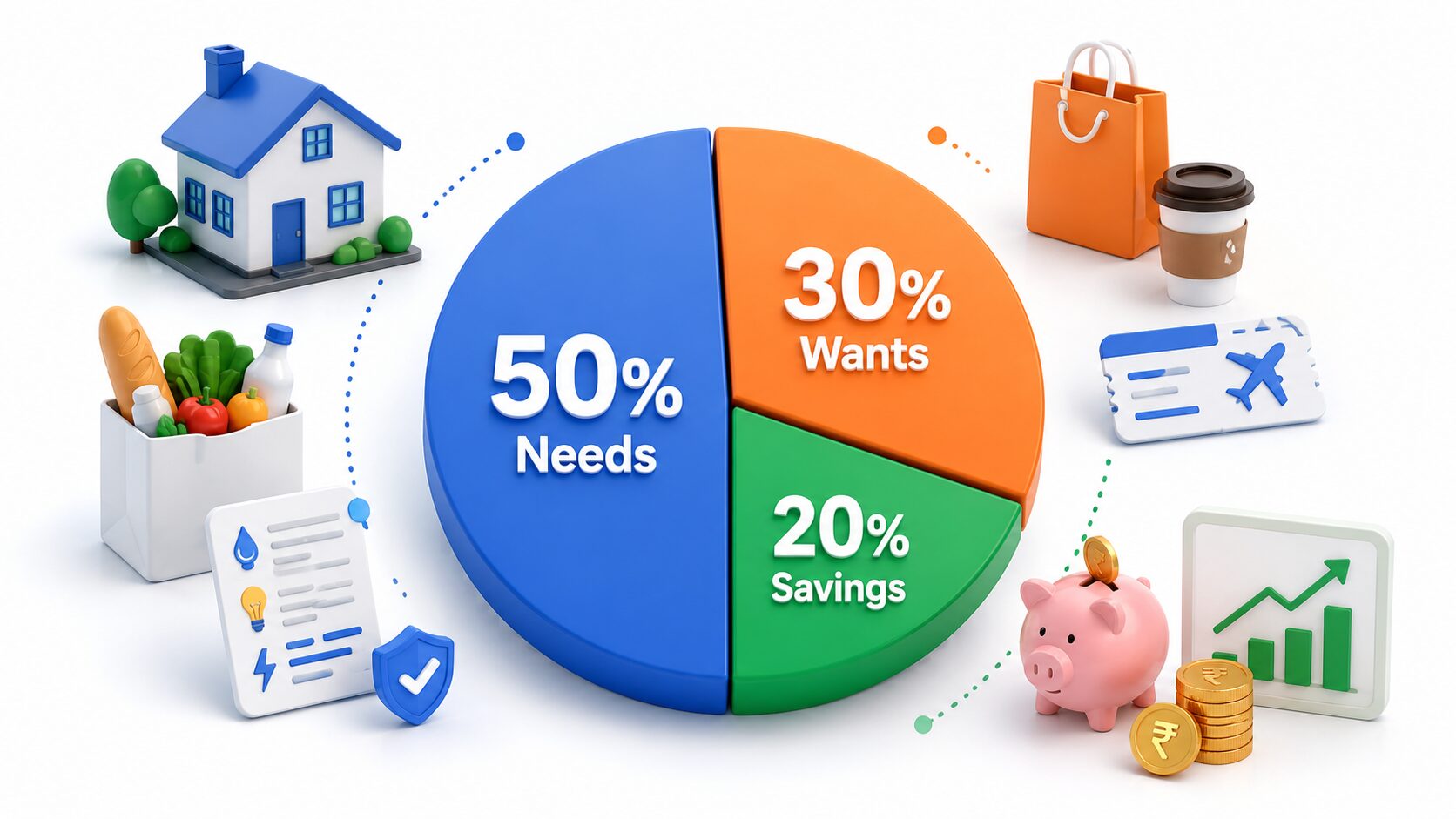
50/30/20 Budget Rule: A Simple Guide to Managing Your Money
Last Updated: July 28, 2026
Editorial Note: This article is intended for educational and informational purposes only. The 50/30/20 Budget Rule is a general budgeting framework and may not suit everyone’s financial situation. Readers should adapt their budget according to their income, expenses, financial goals, and local cost of living.
Key Takeaways
- The 50/30/20 Budget Rule divides your after-tax income into three categories: 50% for needs, 30% for wants, and 20% for savings and debt repayment.
- It is one of the simplest budgeting methods for beginners.
- The rule helps balance everyday expenses while building long-term financial security.
- Your budget percentages can be adjusted depending on your financial situation and cost of living.
- Consistency is more important than following the rule perfectly.
What Is the 50/30/20 Budget Rule?
The 50/30/20 Budget Rule is a simple budgeting method that helps you manage your money without creating a complicated financial plan.
The idea is straightforward:
- 50% of your income goes toward your needs
- 30% goes toward your wants
- 20% is allocated to savings and debt repayment
Instead of tracking every dollar you spend, this budgeting framework focuses on allocating your income into three broad categories, making it easier to control spending and build healthy financial habits.
The rule gained popularity after being introduced by U.S. Senator Elizabeth Warren and Amelia Warren Tyagi in their book All Your Worth: The Ultimate Lifetime Money Plan.
Whether you’re just starting your career, managing a household, or looking to improve your finances, the 50/30/20 Budget Rule provides a practical starting point.
How Does the 50/30/20 Budget Rule Work?
The rule divides your after-tax monthly income into three spending categories.
50% for Needs
Needs are expenses that are essential for daily living and cannot easily be avoided.
Examples include:
- Rent or mortgage payments
- Groceries
- Electricity and water bills
- Internet (if essential for work)
- Health insurance
- Transportation costs
- Minimum loan or credit card payments
If your essential expenses consistently exceed 50% of your income, you may need to reduce discretionary spending or look for ways to increase your income.
30% for Wants
Wants are non-essential expenses that improve your lifestyle but are not necessary for survival.
Examples include:
- Dining out
- Coffee shops
- Movie tickets
- Streaming subscriptions
- Shopping
- Vacations
- Gaming
- Premium gym memberships
Cutting back on wants is usually the easiest way to free up money for savings or investments.
20% for Savings and Debt Repayment
The remaining 20% should be used to improve your long-term financial health.
This includes:
- Building an emergency fund
- Investing in stocks or ETFs
- Retirement savings
- Mutual funds
- Extra mortgage payments
- Paying more than the minimum on loans
- Other long-term financial goals
Making savings automatic each month can help you stay consistent.
Example of the 50/30/20 Budget Rule
Suppose your monthly after-tax income is $5,000.
| Category | Percentage | Amount |
|---|---|---|
| Needs | 50% | $2,500 |
| Wants | 30% | $1,500 |
| Savings & Investments | 20% | $1,000 |
Using this approach, you know exactly how much you can spend in each category without constantly worrying about your budget.
How to Calculate the 50/30/20 Budget Rule
Calculating your budget is simple.
Step 1
Determine your monthly after-tax income.
Step 2
Multiply your income by 50% to calculate your needs budget.
Step 3
Multiply your income by 30% for discretionary spending.
Step 4
Multiply your income by 20% to determine how much you should save or invest each month.
Review these percentages regularly as your income and expenses change.
Benefits of the 50/30/20 Budget Rule
The 50/30/20 Budget Rule has remained popular because it is easy to understand and flexible.
Some of its key benefits include:
- Easy for beginners to follow
- Encourages regular saving
- Helps control unnecessary spending
- Reduces financial stress
- Promotes balanced money management
- Requires minimal tracking compared to detailed budgeting systems
Limitations of the 50/30/20 Budget Rule
Although the rule works well for many people, it may not suit every financial situation.
Some limitations include:
- Housing costs may exceed 50% in expensive cities.
- Freelancers and gig workers often have irregular income.
- Families with children may have higher essential expenses.
- People with significant debt may need to allocate more than 20% toward repayments.
The percentages should be viewed as guidelines rather than strict rules.
Who Should Use the 50/30/20 Budget Rule?
This budgeting method is particularly suitable for:
- First-time budgeters
- Young professionals (Check out how young professionals can start saving & investing)
- College graduates
- Families looking for a simple budgeting system
- Individuals with stable monthly income
Who May Need a Different Budgeting Method?
The 50/30/20 Budget Rule may not be ideal for:
- Freelancers
- Self-employed professionals
- People with irregular income
- Individuals living in high-cost cities
- Those aggressively paying off debt
Alternative budgeting methods, such as zero-based budgeting or the envelope method, may be more appropriate in these situations.
Tips to Make the 50/30/20 Budget Rule Work
To get the most out of this budgeting method:
- Track your spending for the first few months.
- Automate your savings.
- Review your budget every month.
- Build an emergency fund before investing aggressively.
- Avoid lifestyle inflation as your income grows.
- Adjust the percentages if your financial situation changes.
Common Budgeting Mistakes to Avoid
Even with a simple budgeting framework, mistakes can happen.
Common budgeting mistakes include:
- Ignoring irregular annual expenses
- Not tracking spending habits
- Spending too much on discretionary purchases
- Forgetting to build an emergency fund
- Setting unrealistic savings goals
- Failing to review the budget regularly
Remember, a budget should evolve as your financial situation changes.
50/30/20 Budget Rule
Before committing to a mortgage, consider using the 50/30/20 Budget Rule to determine whether your monthly housing costs fit comfortably within your overall financial plan.
50/30/20 Budget Rule vs Other Budgeting Methods
| Budgeting Method | Best For |
|---|---|
| 50/30/20 Budget Rule | Beginners seeking simplicity |
| Zero-Based Budget | Detailed planners |
| Envelope Budget | Cash spenders |
| Pay Yourself First | Long-term savers |
Each method has its strengths, and the best choice depends on your financial goals and spending habits.
Is the 50/30/20 Budget Rule Right for You?
There is no universal budgeting method that works for everyone.
The 50/30/20 Budget Rule provides an excellent starting point, especially if you’re looking for a simple way to organize your finances. However, don’t be afraid to adjust the percentages if your living expenses, debt obligations, or financial priorities require a different approach.
The goal is not to follow the rule perfectly but to create a sustainable budget that supports your long-term financial well-being.
Conclusion
The 50/30/20 Budget Rule is one of the simplest and most effective budgeting frameworks for managing your money. By allocating your income between needs, wants, and savings, you can create a balanced financial plan without spending hours tracking every expense.
Whether you’re saving for retirement, building an emergency fund, or simply trying to spend more intentionally, the 50/30/20 Budget Rule offers a practical foundation for better money management. Start with the recommended percentages, monitor your progress, and make adjustments as your financial goals evolve.
Frequently Asked Questions (FAQs)
1. What is the 50/30/20 Budget Rule?
The 50/30/20 Budget Rule is a budgeting method that allocates 50% of your after-tax income to needs, 30% to wants, and 20% to savings and debt repayment.
2. How do you calculate the 50/30/20 Budget Rule?
Calculate your monthly after-tax income and divide it into three categories: 50% for essential expenses, 30% for discretionary spending, and 20% for savings or additional debt repayment.
3. Is the 50/30/20 Budget Rule good for beginners?
Yes. Its simple structure makes it one of the best budgeting methods for beginners who want to manage their finances without creating a complex budget.
4. Can I modify the 50/30/20 Budget Rule?
Yes. The percentages are guidelines and can be adjusted based on your income, living expenses, debt levels, and financial goals.
5. Does the 50/30/20 Budget Rule work with irregular income?
It can, but people with variable income may need a more flexible budgeting approach or use average monthly earnings as a reference.
6. What counts as needs under the 50/30/20 Budget Rule?
Needs include essential expenses such as housing, groceries, utilities, transportation, insurance, and minimum debt payments.
7. What counts as wants?
Wants include discretionary expenses such as dining out, vacations, entertainment, shopping, subscriptions, and hobbies.
8. Should debt repayment be included in the 20% category?
Minimum debt payments are generally considered a need, while extra payments made to reduce debt faster can be included in the 20% savings and debt repayment category.
9. Is the 50/30/20 Budget Rule suitable for high-income earners?
Yes. High-income earners can use the framework as a starting point, although many choose to allocate a higher percentage toward savings and investments.
10. Which budgeting method is better than the 50/30/20 Budget Rule?
There is no single budgeting method that is best for everyone. The right choice depends on your income, spending habits, and financial goals. The 50/30/20 Budget Rule is ideal for simplicity, while methods like zero-based budgeting offer greater control for detailed planners.
Disclaimer
This article is for educational purposes only and should not be considered financial or investment advice. Always conduct your own research or consult a qualified financial advisor before making investment decisions.
What is Compound Interest? Read More
A good budget planner can help you build consistent money habits and stay on track with the 50/30/20 Budget Rule. Shop now.